Enantiodromia: From Humanism to anti-Humanism in half a century.
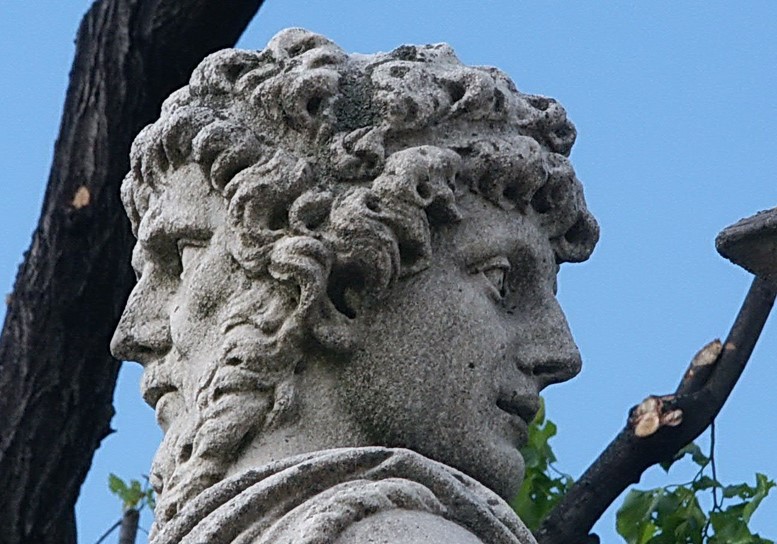
Figure 1: "Cold things warm, warm things cool, wet things dry and parched things get wet" – Heraclitus
It was an autumn evening at the UCL student union bar in the 1980s when I first became a Humanist. That is to say, when I first found a group of people who I believed were "like me". Freshers week is a recruitment bonanza at British universities. Everyone from the Socialist Workers Party to MI5 stalk the stalls. Having just settled in to my halls of residence, I was with two new friends. One was keen to join-up and persuaded me to. The other shrugged, "All anti-dogmas turn into dogmas", and he sloped-off for a pint and a smoke.
I helped the Humanists. As an enthusiastic young volunteer at the British Humanist Association I created their first word-processing IT system from donated 8086 PCs with noisy golf-ball printers. London's Red Lion Square was beautiful in the Autumn of '88. After my computer science lectures I hung out at Conway Hall listening to the cream of speakers on philosophy, scientific method, feminism, human rights and rationalism.
Now, it is actually strange to think how these tribes blended into a single identity. To a teenager, simply the experience of being immersed in a group of smart and articulate people, being exposed to challenging new ideas, was exhilarating. We had joint events with the Sceptics Society, the International Humanist and Ethical Union and other groups. Apparently I was a "progressive". Graduation came. I left London, became a PhD student and practising computer scientist, but clung to my "identity" as a Humanist as years went by.
Something changed around the turn of the century. I started to detect a disagreeable note within progressive circles. It started in the United States. Humanists there had always been at loggerheads with Christian Fundamentalists, anti-abortionists, and racist throwbacks. By now the friend who had introduced me to Humanism had become a prominent figure in the movement. The last time we spoke I expressed my concern that our philosophy was starting to look too much like politics. We'd become evangelical. Raising money. Lobbying. Attacking people.
Though I was raised a Christian, at that time I didn't even have a problem with positions as wild as Antitheism. Indeed Christopher Hitchens was one of my favourite speakers. The theosophy of passionate rejection of the idea of God, not merely disbelief, was something I found fascinating, and I'd say it broadened my mind and has stood me in good stead as a philosopher. But as I listened more to figures like Richard Dawkins in the post 9/11 miasma of anti-Islamism I found someone I sincerely disliked. In the days of "with us or against us", I sensed those first seeds of "secular madness", a deep meanness and intolerance that would erupt into extreme polarisation 20 years later.
What emerged was a smug, knowing, superior, mocking tone that I felt could not befit us as scientists. At least not ones like myself who still burned with curiosity, imagination and openness. I had energy to learn from other people, not marginalise and demonise them.
I saw through Dawkins like a cheap pair of curtains. Living proof that one can exude dry wit yet remain entirely humourless, his tediously "authoritative" Oxbridge voice claimed to "speak for science". Not my science. In reality, Dawkins exploited science. Like a growing number of secular rationalists he made personal and political capital from disparaging the "stupidity" of his out-group. Ironic of course, because one might suppose a biologist had some insight into anthropology and tribalism.
Dawkins was a tourist, stridently riding the wave of what modest thinkers struggle quietly with. A world that is not obvious or easy. It was shameful to see this biologist puff himself up into a spokesman for concepts like information, consciousness, time and causality, computability and things I'd been wrestling with my whole life and still do, but then use that platform to do his own psychological laundry about God. I bumped into the limits of Rational Humanism. It was ugly hubris.
That period heralded a rising cultural tsunami of celebrity eggheads. While some may truly love science they paved the ground for performant impostors including figures like Gillian McKeith and others whose synthesis of media-friendly populism and accessible "expertise" enables scienceploitation, extraordinary techno-hype cycles up to and including the present "AI" fog.
The triumph of form over utility, of plausible appearance over substance, defines the early 21st century. Fake it till you make it. Insist on what is "crucial", "inevitable", "essential". Professional managers, gurus and consultants, armchair economists, people who claim to be "evidenced based" but lack even the most basic science and engineering skills to evaluate or even recognise evidence… these are our new kings and queens. At the same time they lack any semblance of emotional intelligence to understand the context or consequences of what they do. Inchworms measuring the marigolds, oblivious to their beauty.
I did not immediately return to Christian belief, but soon found myself on a quest to meet "bigger people" - by which I mean ordinary human beings with capacities lacking in the friends and colleagues I'd surrounded myself with in the now intellectually dead universities.
I discovered that if you want to meet people with a big view, you might not find them at the top of a mountain, but in quiet, secluded places. Temples, churches and mindfulness retreats became my new hobby. Of course I was a tourist there myself. I wanted to reconnect with what I'd always seen as the core values of humanism - humanity, empathy, love. From the one-dimensional tedium of capitalism, a temporary escape came through Erich Fromm, psychoanalysis, tech-critique like Mumford, Ellul and Postman. I needed a bigger picture of technology and the mission I was on.
Meanwhile I sensed that the world of so many others was rapidly shrinking. Retreating into the 6 inches of black mirror, seeking mindless amusement and empty pseudo-participation in echo-chambers. Cautious scientists, like those monitoring the mental health effects of social media and smartphones were soon marginalised by the same old mockery and accusations of "Luddism".
As time went on I watched the "secular rationalists" devolve. Social control media captured them into echo chambers and algorithms reorganised them into new, re-educated regiments. They metamorphosed and accreted with new tribes, neophytes, futurists, cosmists, technofascists and transhumanists. The old "Humanist" science was being erased under extreme forms of capitalist-realism. Care, compassion, long-termism, complex thinking - all were now trodden under the boot of "move fast and break things".
The past decade has been an acceleration of "rational" insanity. As if realisation of climate emergency has made us, like an addict, need to hit rock-bottom, to empty the bottle, to give it "all or nothing" and conclusively prove our worthlessness to ourselves.
A new order has been coming to "rational conclusions" on matters of depopulation, space colonisation, cybernetic governance, benevolent eugenics, super AI and things that all sound a little too familiar, a "new millennium of glory" and all things reminiscent of that shitshow from 80 years ago. All they needed to start marching was a charismatic leader. Thankfully Mark Zuckerberg is an ineffectual, objectionable dweeb. But others have been waiting in the wings, and are coming out of the shadows at last.
All things contain the seeds of their opposite. As my great mentor once explained to me, political thought is not an axis. It is not a line that extends from "left" to "right" but a clock. Travel far enough to the left and you circle back to to a far-right position, and vice versa. The first time I recognised this in theory was reading Barbrook and Cameron's 1995 "The Californian Ideology". It describes how nominally progressive US hyper-liberalism was fusing with technological determinism to create a new Utopian cult. Only a decade passed between that essay and obvious signs of its emerging reality.
The ego keeps its integrity only if it does not identify with one of the opposites, and if it understands how to hold the balance between them. This is possible only if it remains conscious of both at once. However, the necessary insight is made exceedingly difficult not by one’s social and political leaders alone, but also by one’s religious mentors. They all want decision in favour of one thing, and therefore the utter identification of the individual with a necessarily one-sided ‘truth’. Even if it were a question of some great truth, identification with it would still be a catastrophe, as it arrests all further spiritual development. – Carl Jung
The magnificently self-assured new breed of Utopians still look human. But they fully intend to leave the rest of the human race 'behind' when they upload themselves into the Great Singularity in the cloud. Or whatever. I've studied enough about the dangers of cults and religions to know one thing for sure - here is a new religion forming. And not a good one.
Along the way they picked up disaffected young men and women, far-right misogynists, people who delight in inequality, race riots, killer drones, the supremacy of BigTech, surveillance capitalism, biometrics, electronic voting and social control. Worryingly, they picked up supporters on the authoritarian left too - people giddy for surveillance "for your own good". For years the Guardian and Observer were conspicuous in their silence, afraid to criticise the tech hand that fed them.
Today on sites like Hacker News you can find exponents of this tech broligarchy, seething in a barely masked hatred of humanity and all of its ugliness and faults that can be "replaced by AI".
On the "Death of God" Nietzsche asked, what new things will we have to create to be worthy of this deed? This is it. Behold the evolutionary line from secular rationalist, to cosmic transhumanist, to unabashed, naked anti-humanists calling for "replacement" of our species.
Should I have just walked off for a beer all those years ago? No. I'd have missed the show. On reflection I'm privileged as an independent freethinker. To have kept to my own path, and had the courage to drop ideas and groups I think are going wrong, I've managed to dodge toxic institutional alliance. "Scientist" and "Humanist" were never my identity, just things I believed in. There's a difference. We do not need to identify. To grow is to change beliefs.
So I've enjoyed a perspective that traces the full trajectory of those who claim to stand besides science and technology as an identity. I've seen where it's taken them. What a journey! From feminist atheists to misogynistic followers of a neo-theist technofascist cult! Never so much does a critique of "authenticity" (Kierkegaard and Heidegger) seem so important.
What I want to more deeply explore in future is my profound rejection of identity and idolatry which I've developed through Christian, Taoist and Esoteric theosophy. I've a hunch that interpersonal trust is the missing foundation in cybersecurity and that insane ideas like biometrics, strong identity-based solutions, and misunderstandings of "zero trust" may lead us off into the long grass and then toward the dark woods of true fascism. It is not only capitalism and mega-corporatism that is facing its reckoning, but also the cult of the cocksure reductionist. We are going to need finer-grained ways of relating to each other to break the tyranny of polar identity. Before that though, I think in the coming years we'll see the US techno-fascist broligarchy making mistakes every bit as tragic as those of Soviet Communism in the last half of the 20th century.